
Forthcoming exhibition
BLOOM
26 February 2026 onwards
Presented by Studio A.J Adams and Glass.Archive
Oxleaze Farm, Cotswolds GL7

‘BLOOM - Flower Power in the Industrial Age’ is a bold, colourful, revealing and seemingly contemporary exhibition showcasing England‘s love, and fear, for the natural world.
This exhibition will take viewers on a journey from scattering seed to luscious pastures where freshly harvested blooms rest in the arms of country girls. Thereafter their cuttings make their way home where they are arranged, styled and photographed. Cutting flowers was a casual hobby enjoyed by most households at a time when colour was limited in the home. For the vast majority of the population our interiors were still muted and earthy in tone and our clothes natural or bleached linens. Nature and the flowers it had to offer were our only source of colour in nineteenth century England.
I acquired this collection of beautiful early photographs rather accidentally whilst sieving through hours of glass magic lantern slides online. I was initially searching for alternative perspectives of iconic British buildings. What unfolded was a visual story beginning in peaceful tranquility of our great cathedral gardens where flowers were grown for their medicinal properties. I found myself down an incredible rabbit warren led by online algorithms.
I continued down the rabbit warren. A few algorithms later I sprung with excitement having encountered striking black and white portraits of country girls shrouded in striped linens standing in blossom filled orchards. Ferns rest in their arms picked from the leafy carpet beneath their feet. I purchased the portraits based on their sheer quality - the compositions, styling and resolution was too good. I had to buy them. I couldn’t resist. One glass slide portrait was labelled ‘Graystone Bird Bath’. Late one night I searched for this name online . I discovered the portraits were by Owen Graystone Bird of Bath, Somerset, England. Excited, I went on a shopping spree, again. Bird’s portraits are Sandro Botticelli meets Gucci. Like a true Renaissance man he triumphs an ideal beauty. The sitter’s are iconified - each figure stands tall and gazes across their natural habitat. We could be looking at Eden. When Gravestone bird took these photographs England had remained unchanged for centuries. Its people had three great passions; God, monarchy and gardening. As my collection grew I realised the portraits were staged, directed as good as any luxury fashion campaign. I asked myself, ‘Why would a rural scene in nineteenth century Britain have to be acted out?’ These striking portraits suggest mankind and all its earthly delights coexist harmoniously. Yet, I soon understood behind the lens this innocent scene couldn’t be further from reality.
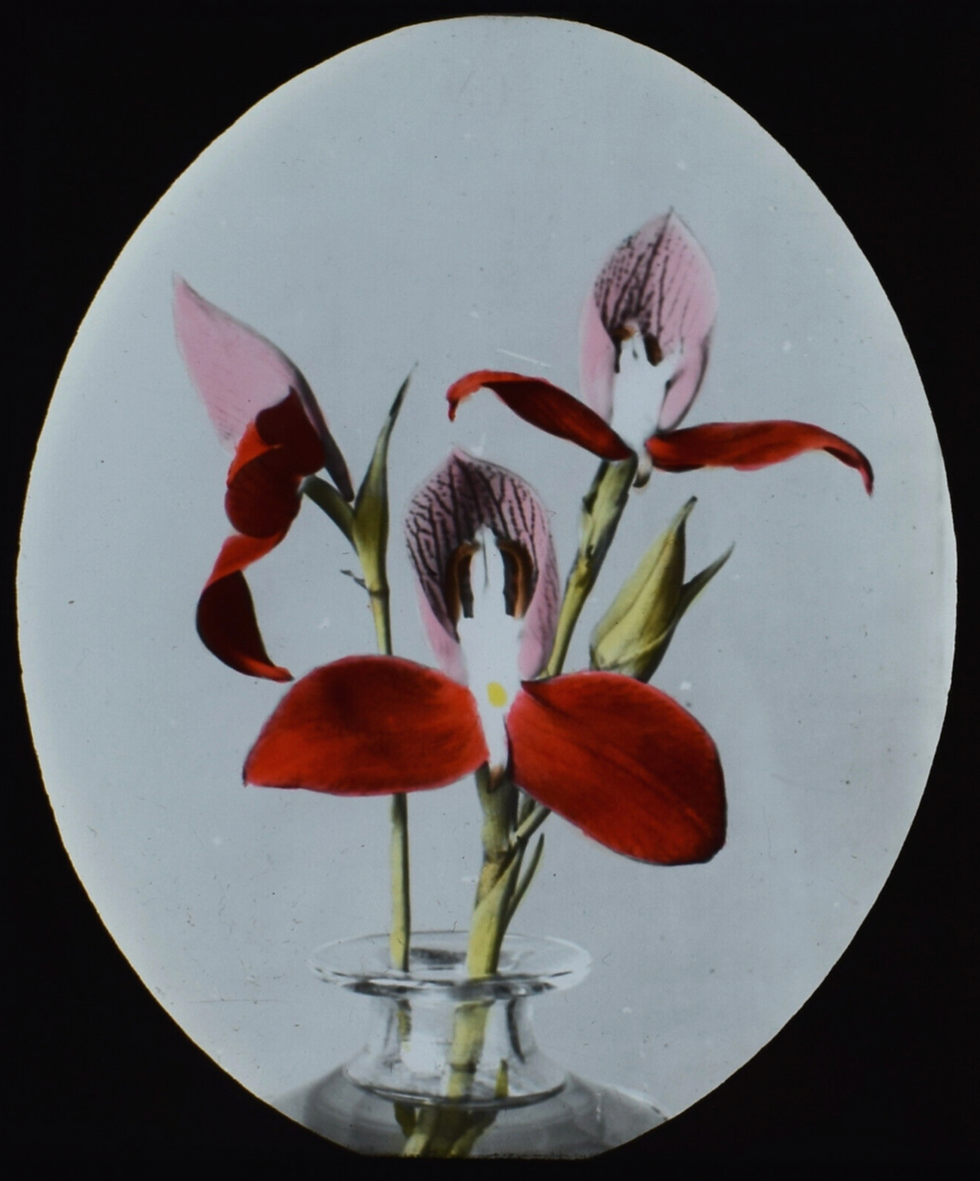
Each flower portrait showcases varieties in singular form or combinations meticulously arranged. Each one is styled so creatively. The portraits have been hand-coloured directly onto the glass slide using a brush. The photographer(s) remain anonymous. These photographs were reproduced and distributed by Fleet Street studios for the purpose of magic lantern shows. The magic lantern was a touring projector used for education and leisure. Pre-cinema, these botanical images were projected onto the walls of halls and reading rooms across Britain and were enjoyed by the keen amateur gardener and grower. These powerful photographs can’t simply be translated into the language of floriography. The message behind these photographs is revolutionary - each and every photo in this collection advocates for our natural world. An agitated nation is empowered by the rebel photographer with a photographic ‘army’ distributed to all corners of society, from passionate growers to royalty. In the Far East, cherry blossoms symbolise renewal and the promise of new beginnings. On the contrary these seemingly innocent photographs mark the ‘beginning of the end’ of the Western world. Behind the beauty of ‘BLOOM’ is a tale of a society reluctant for change, a population in fear of an industrial Revolution. This is simply the earliest campaign to save our natural world. This important collection is the voice of a people disregarded by industry and economic growth - a society all rightfully in fear of imminent harm on our planet and way of life. Yet, with all the passion behind the works the crisis isn’t immediately obvious - defiant, a smoke screen, highly stylised, romanticised. An urge to capture and thus retain an unharmed England. The photographs in ‘BLOOM’ are manufactured in the purest sense, just as manufacturing was beginning to take on a whole new meaning. For some the development of man made machine power was thrilling. To others it was terrifying. Can you begin to imagine the fear of smoke fulled skies due to burning fuels? The effect the Industrial Revolution would have on our planet was ever growing with the world’s modern environmental problems greatly exacerbated by it. Natural resources, global water and air pollution, reductions in biodiversity, destruction of wildlife habitat, and even global warming can be traced back to this moment in human history.
The fast growth of industry led to rapid changes in people's living and working conditions were poor, factory work hard and labour poorly paid. Cities and towns filled with smog and food was scarce - living now dire. The Luddites were the first to push back on the threat of the industrial age with particular concerns surrounding the effect mechanical innovation had on the textile industry. 1870 to the late 1890’s saw further unrest with the Great Agricultural Depression caused by cheap importation of American grain. The rural epidemic in Britain during this time only makes the photographs exhibited in ‘BLOOM’ ever more poignant. The photographer‘s foresight of our eco system’s imminent decline is clear - their instinct and the circumstances in which these works were created gives flowers an entirely new meaning. Like the red poppy commemorating the millions lost at war these colourful images full of life symbolise a nation’s loss. Each flower is captured by a hand clutching on to beauty. Their focus on the natural world allowed them a moment of solace, for a time. For many of us we are all too aware of the joy and escapism nature can bring us.
Graystone Bird’s portraits support this collection of flower portraits. These portraits are newly discovered and have been in private hands for over a century. Bird was the Tim Walker of his day. His work can be found in London’s V & A, Wellcome and Royal Collection. Both Queen Victoria and King Edward VII were patrons of his work and in recognition he was given a royal warrant. The portraits by Greystone Bird on view here have never been seen before and are some of the most beautiful created during a long illustrious career. Large scale prints of his portraits are on view throughout the exhibit. The highlight is Graystone Bird’s original glass slides displayed in a lighbox.
‘BLOOM’, the third show I’ve curated in recent years highlights both the fear people had of the industrial revolution, an era that promised health and prosperity for all when in reality it marked the beginning of an environmental crisis, and the passion Britain had in preserving its natural heritage with photography becoming society's passionate expression and fighting force.
Photos: Photographer unknown. English c.1870 GLASS.ARCHIVE

Describe your image

Describe your image

Describe your image
Describe your image
Artworks



Gallery & Retail space
GLASS.ARCHIVE is based on a beautiful farm in The Cotswolds. This very special photography and fine art print dealership with its gallery and retail space is just over an hours drive from London, approximately 8 miles from junction 15 (Swindon A419/Burford A361).
Open Tuesday - Thursdays 10 - 1600
If you are a buyer, gallery or museum professional we would love to hear from you. Please email us ajafineart@mail.com
